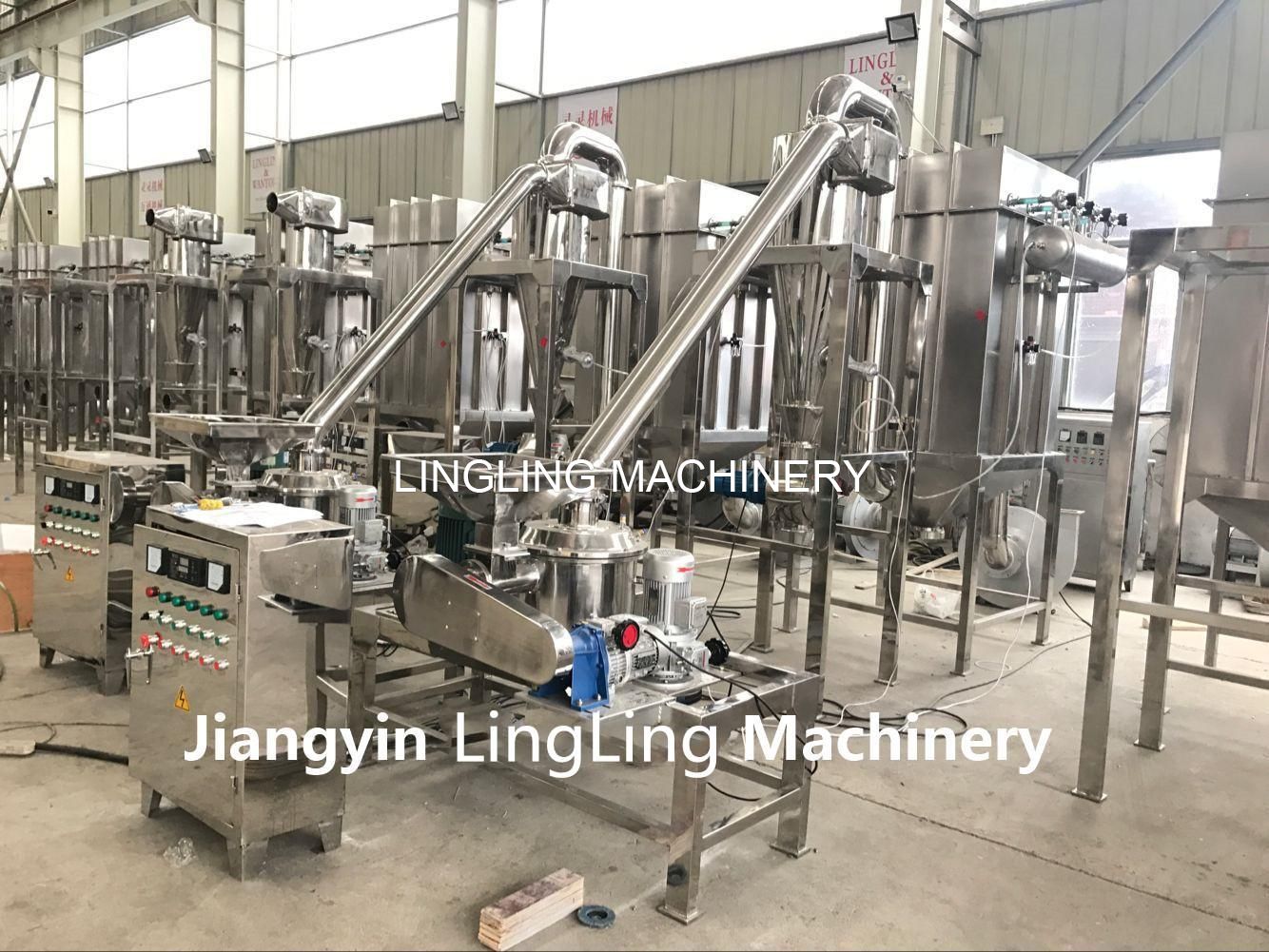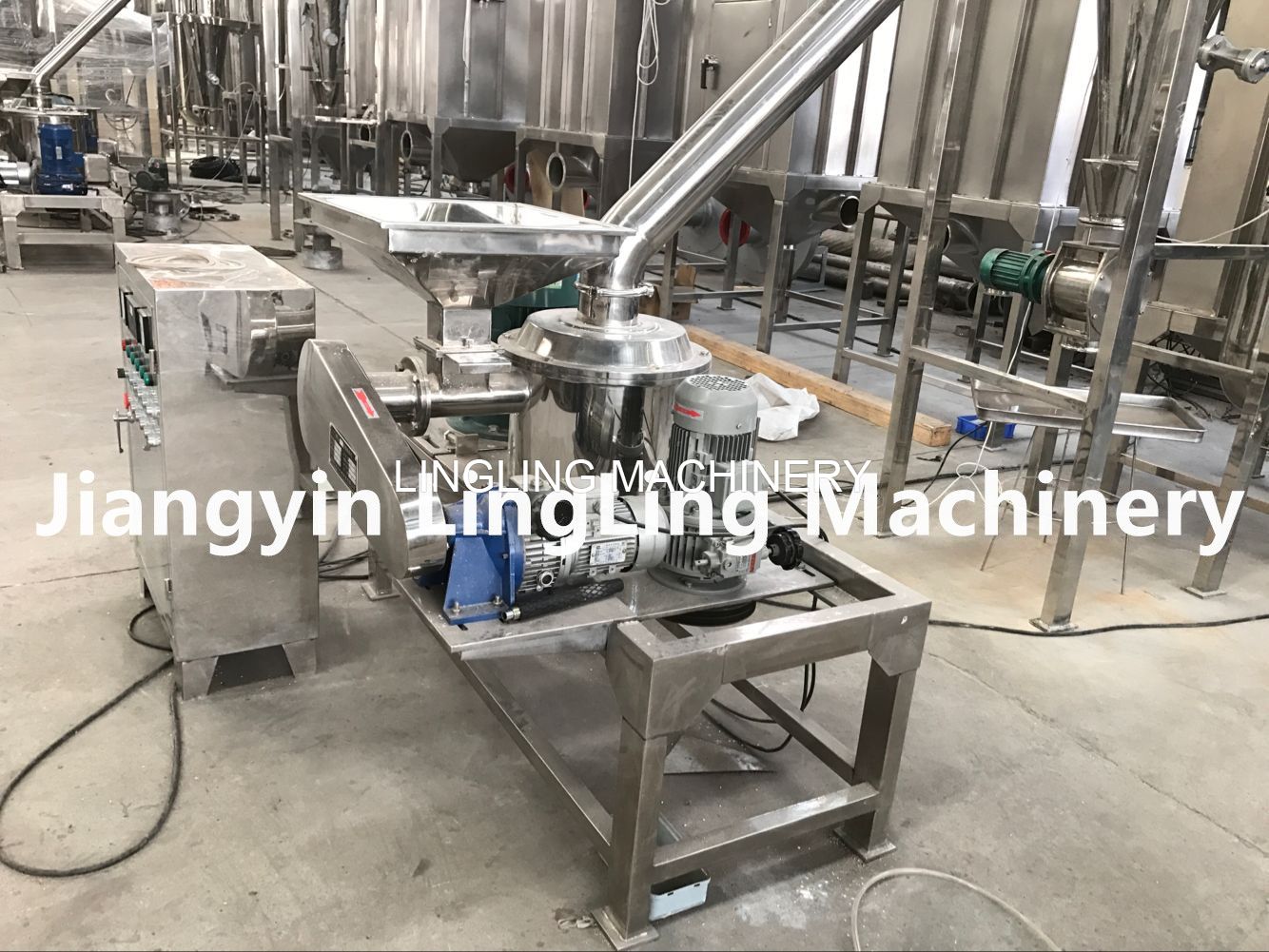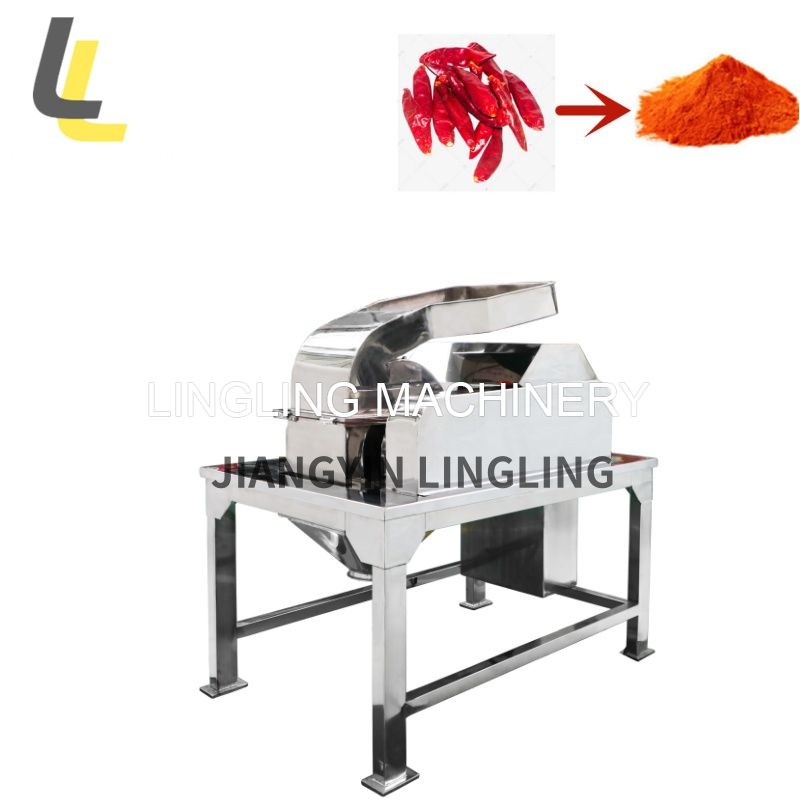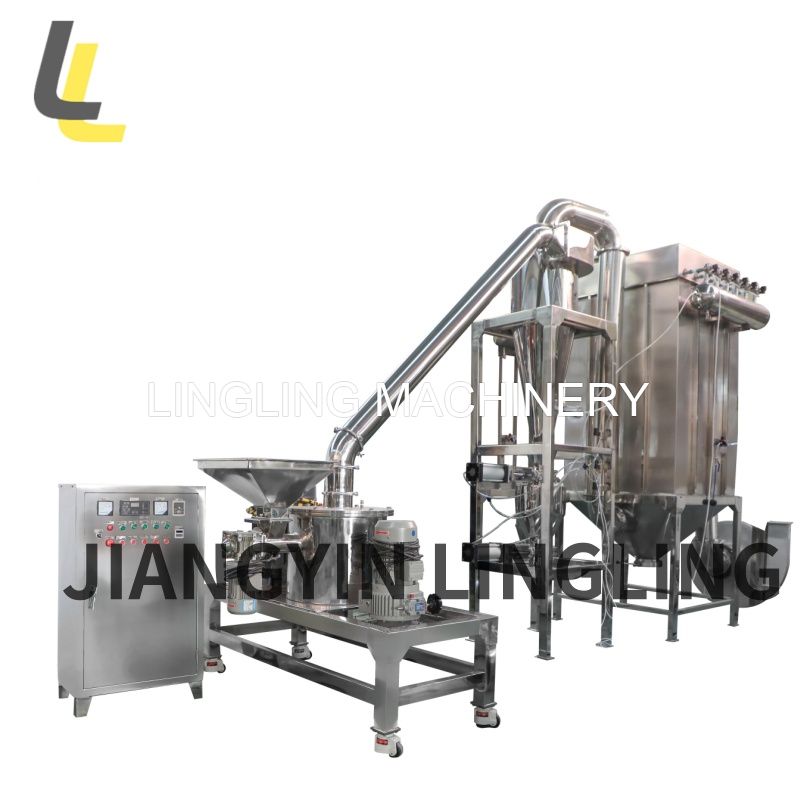

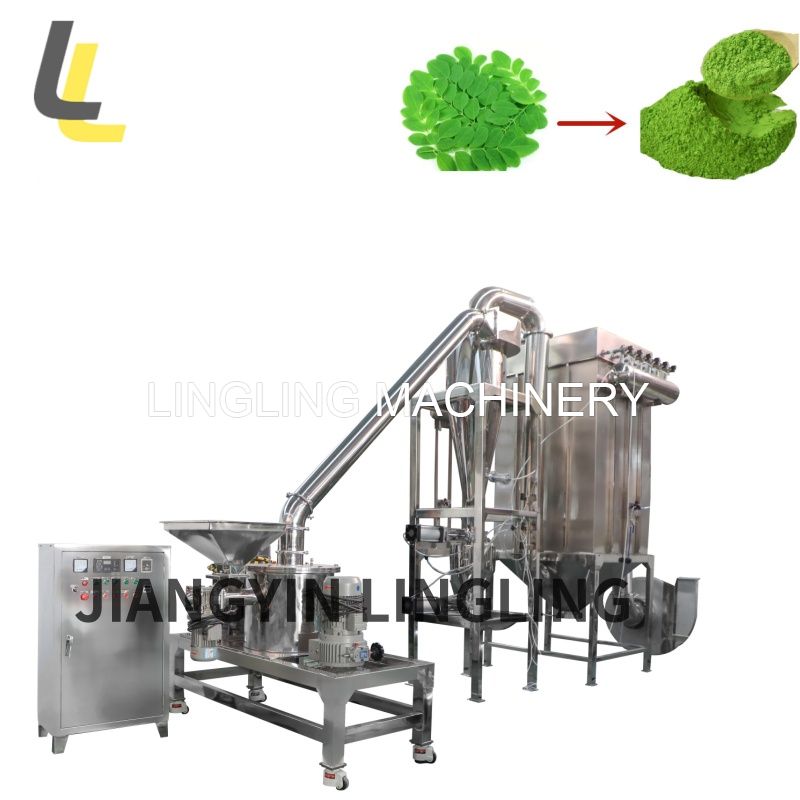
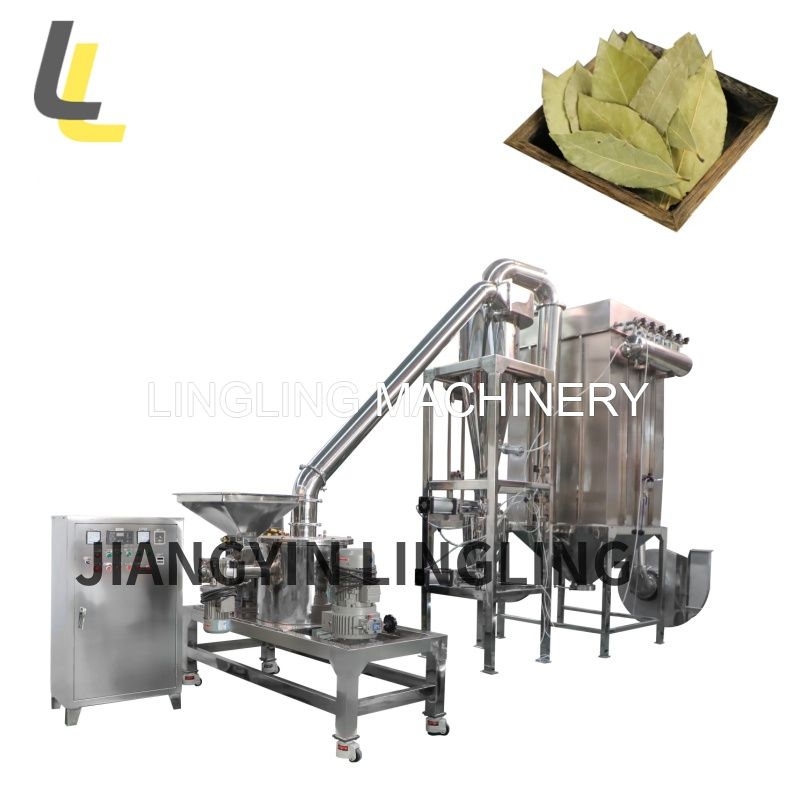
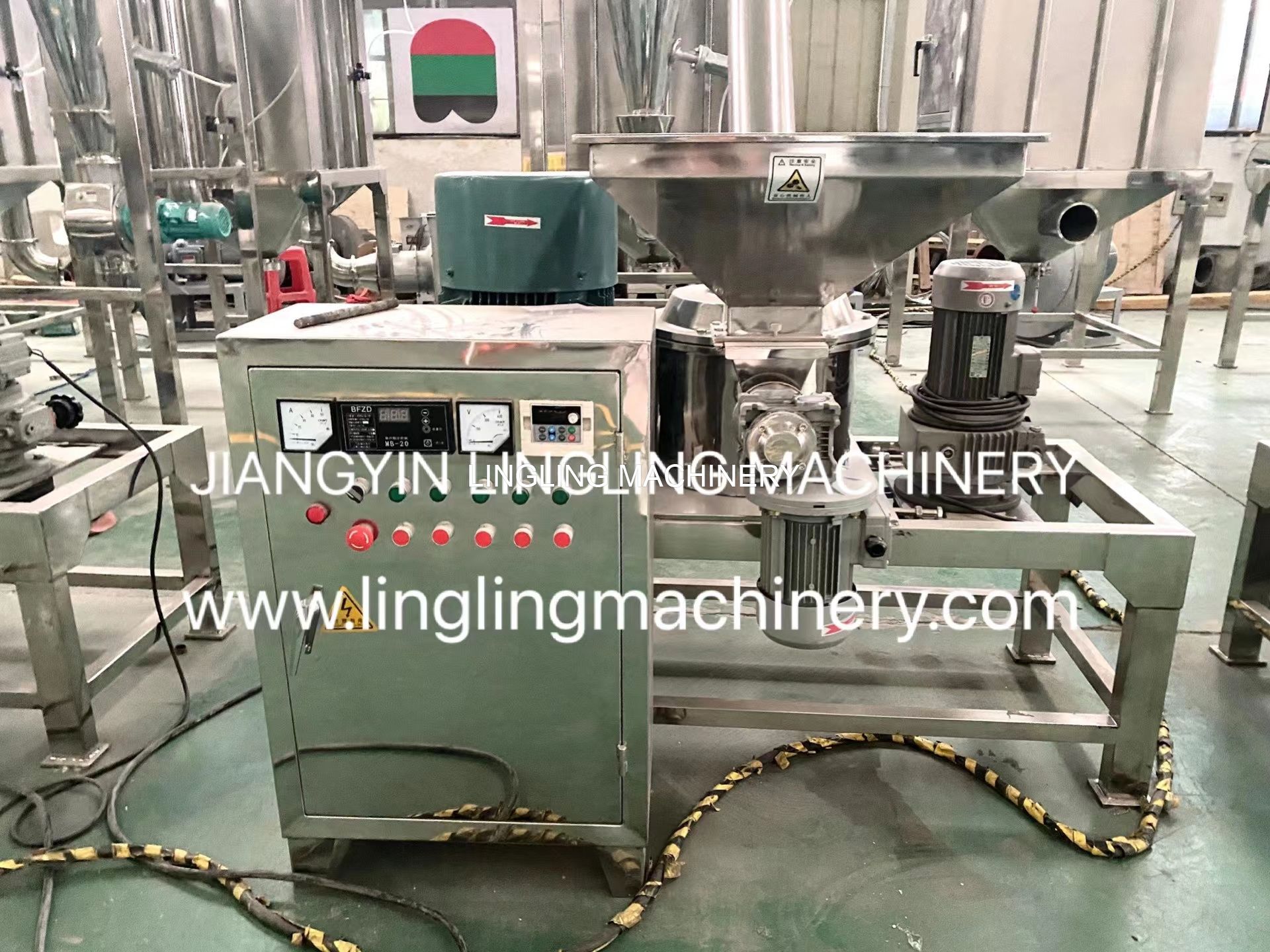
### Core Function & Use Case
Delicate leaves and herbs are easily damaged by heat, friction, or over-processing, which can destroy their natural nutrients, volatile oils, and color. This machine is purpose-built to solve these issues, using a low-heat air-classification system to keep herbal ingredients intact.
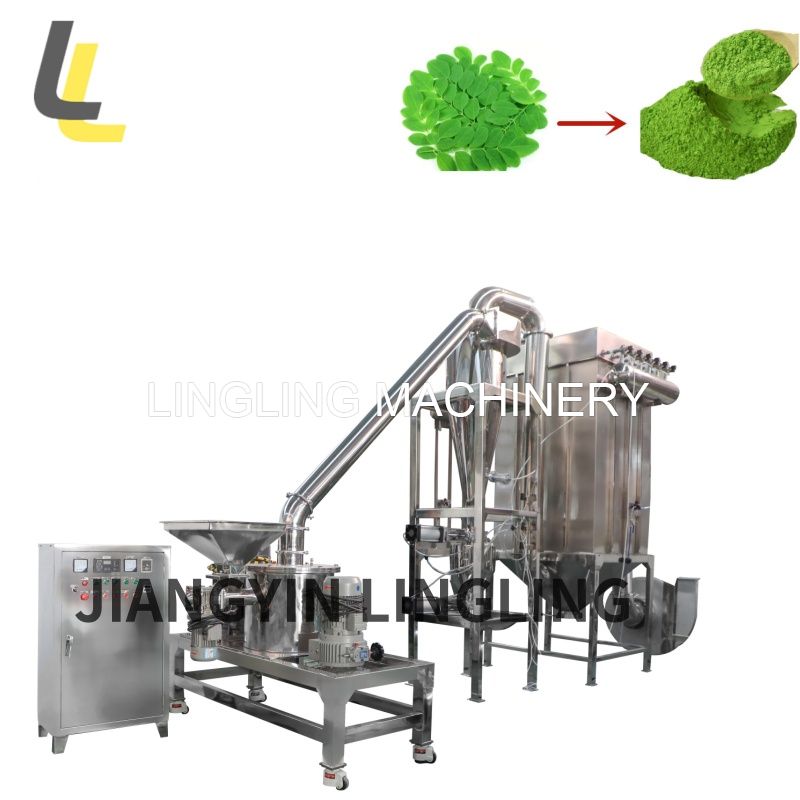
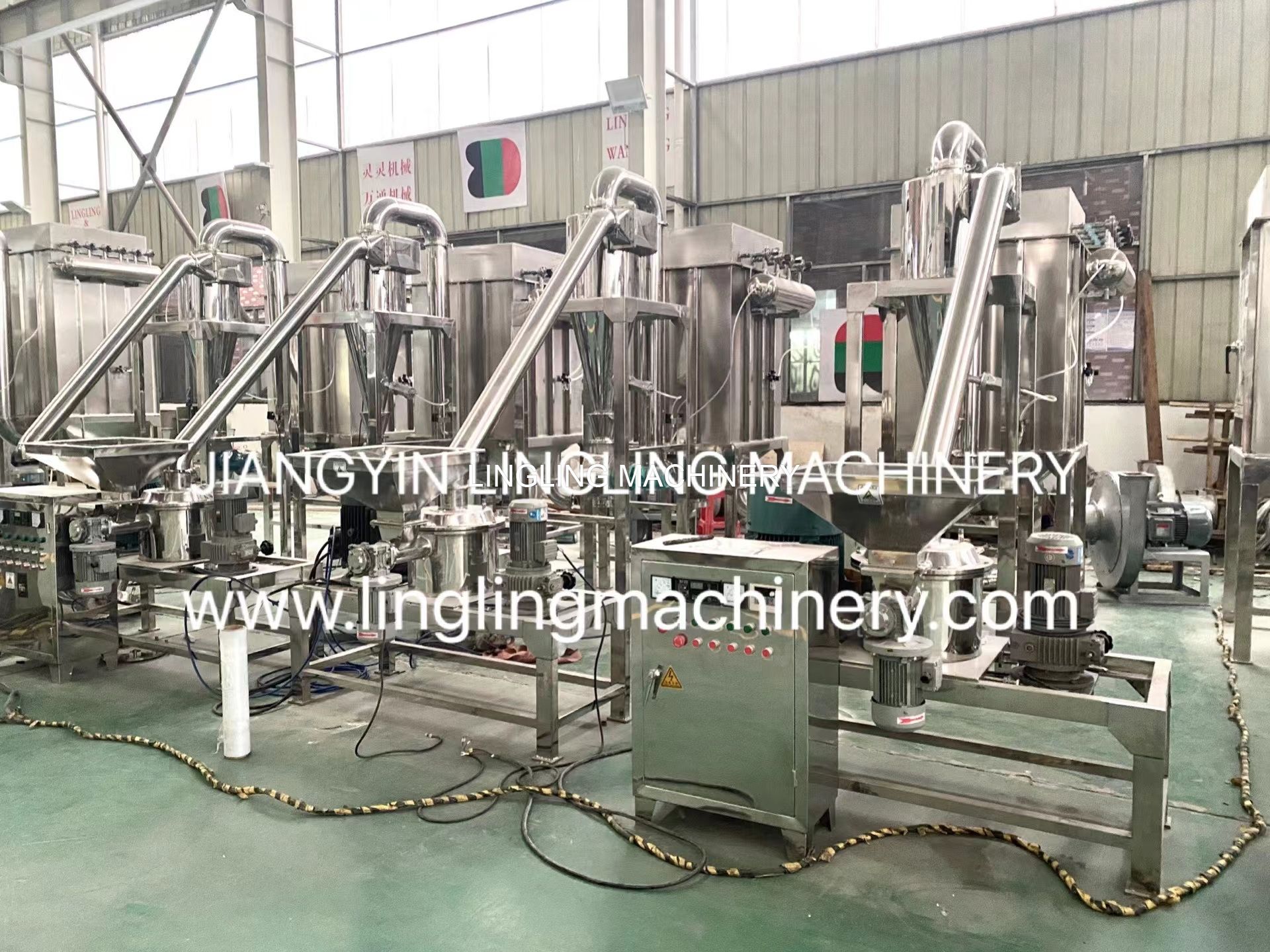
Composed of three core units — the main grinding unit, auxiliary system, and electric control box — it supports continuous, gentle processing. Widely used in herbal supplement factories, tea blending plants, and cosmetic facilities, it handles everything from moringa leaves to tea and spices.
### Tailored Advantages for Leaves & Herbs - **Nutrient & Color Preservation**: The low-friction, air-cooled grinding process keeps temperatures low, preventing oxidation and preserving the natural green color, vitamins, and active compounds of leaves. - **Adjustable Fineness Without Sieves**: Control particle size from fine tea blends to ultra-fine herbal extracts by adjusting the classifier speed, eliminating the need for sieve changes. - **Dust-Free, Cross-Contamination-Free Operation**: The fully enclosed system collects all fine leaf dust in the built-in box, preventing material loss and ensuring safe switching between different herbs. - **Food & Pharma-Grade Hygiene**: Smooth, non-porous contact surfaces meet strict safety standards, making it suitable for sensitive ingredients used in supplements and cosmetics. - **Multi-Plant Versatility**: Handles moringa leaves, tea leaves, spices, and a variety of other plant materials, making it a flexible solution for herbal processing lines.
### Design & Working Principle The Leaf Grinding Machine operates through a gentle, temperature-controlled process: 1. **Controlled Feeding & Shearing**: Leaves or herbs are fed into the mill via a screw conveyor, where precision blades shear the material into fine particles without generating excessive heat. 2. **Air Classification & Cooling**: The powder passes through a guide ring into the classification chamber. Oversized fragments are flung back for reprocessing, while airflow cools and carries fine particles forward. 3. **Cyclone Separation & Collection**: Fine, nutrient-preserving leaf powder enters the cyclone separator, where it is collected as finished product. 4. **Dust Filtration & Recovery**: Any residual dust is captured in the dedicated collection box, ensuring full material recovery and a clean workspace.
| Model | WFJ-10 | WFJ-15 | WFJ-20 | WFJ-30 | WFJ-60 | WFJ-80 | WFJ-100 |
| Production Capacity (kg) | 10~50 | 50~100 | 80~200 | 200~400 | 400~800 | 500~1000 | 600~1200 |
| Feeding size (mm) | <5 | <10 | <10 | <12 | <12 | <12 | <12 |
| Crushing fineness (mesh) | 80-600 | ||||||
| Motor power (kw) | 12 | 13.37 | 18.37 | 42.5 | 77.5 | 96 | 138 |
| Spindle speed (rpm) | 4000 | 5800 | 4200 | 3800 | 3200 | 2800 | 2000 |
| Weight (kg) | 500 | 1000 | 1200 | 1800 | 2500 | 3000 | 4000 |
| Overall dimension (L*W*H)(mm) | 1700x1800x2200 | 4500x1250x2700 | 6000x1250x2900 | 7100x1300x3650 | 8000x2300x4500 | 8500x2500x4600 | 10000x2800x5000 |
*The above specifications are provided for reference only. We can also design and manufacture different standard upon customer's request.